
Imagine putting money into a savings account every month for 30 years, only to discover it bought less than you expected because inflation quietly eroded its purchasing power. That’s why investing has become one of the most important financial skills of our time.
Why Investing Matters?
Investing is important because it helps preserve your purchasing power, which is continually reduced by inflation (general price increase annually). In simple terms, a $100 bill cannot buy you the same goods or services in one year time that you can buy today. For example, if you can afford to buy a sandwich for $5 today. The same sandwich would cost you $5.5 next year. The additional 50c is the inflation. If you have money sitting in a chequing account, it will simply lose its buying power if not invested.

How to deal With Inflation?
To counter inflation, investment can be used to offset the impact. Imaging getting an average return of 8% on investment with the annual inflation rate at 3% would leave your wealth 5% surplus. An additional advantage of investing is the power of compounding. For example, if you invest $1000 and earn a 10% return, your investment grows to $1,100 after one year. If you earn another 10% the following year, your return is calculated on $1,100 rather than the original $1000, increasing your investment to $1,210. Over many years, this compounding effect becomes one of the most powerful drivers of wealth creation.

Beyond Inflation: Building Long-Term Wealth
This pattern creates a passive income channel which might not be scalable at first but after being consistent in first few years can turn into something significant. Many people enjoy a comfortable retirement life after being consistent in their investment habits. Some people do so well that they achieve financial freedom even before retirement. You could be one of them. You just need to start, and the truth is that everybody starts from somewhere. First step is always the hardest part, but you can’t achieve unless you take it.
Where to Invest?
Congratulations! You are already thinking about investing. That’s a significant first step. Next question is where to invest?
Well, there are many options available in market depending on people’s risk profile. One way of investing is by owning a “Stock” or a “Share”. In simple terms, it’s a little portion of large company. It comes with a face market value which buyers are willing to pay. For example, if you buy one share of Micron Technology, you become a part-owner of the company. As Micron’s financial performance, market sentiment, and future expectations change, the value of your investment may rise or fall.
Risk & Reward go together
Remember, to understand the risk return relationship. There is always a risk when investing in stocks when the value is dependent on so many market variables. How do we manage that risk? The answer is “Diversification”. Not all companies come with the same return and reward relationship. The higher the reward, the higher the volatility. One way of achieving diversification is by investing in multiple sectors. Stock performance varies by sectors at a given time. People often build a “portfolio” which essentially is a mix of stocks from different sectors. If one sector underperforms for example financial, technology on the other hand may be performing strongly. This is the approach that many seasoned investors take as it requires continuous market knowledge

Choice for a new Investor – Individual Stocks v ETFs?
The safest approach for a new investor is to buy “ETFs” which means Exchange traded funds. One ETF is a group of many stocks from different market managed by professional fund managers, so investor doesn’t have to research every day. Owning an ETF comes with diversification benefit from experience fund manager but they come with a small fee, often called MERs, management expense ratios which is small % fee and value for money

Where do I go to buy the stocks & ETFs?
No, you do not have to go to the company to buy stocks directly from corporations, I know that’s what you were thinking. Instead, investors use a brokerage platform that acts as an intermediary between buyers and sellers in the stock market. Often Big bank offers this service, but they are normally expensive per trade. Many standalone brokers like Questrade, Wealthsimple in Canada offer zero commission trades
Time in the Market Beats Timing the Market
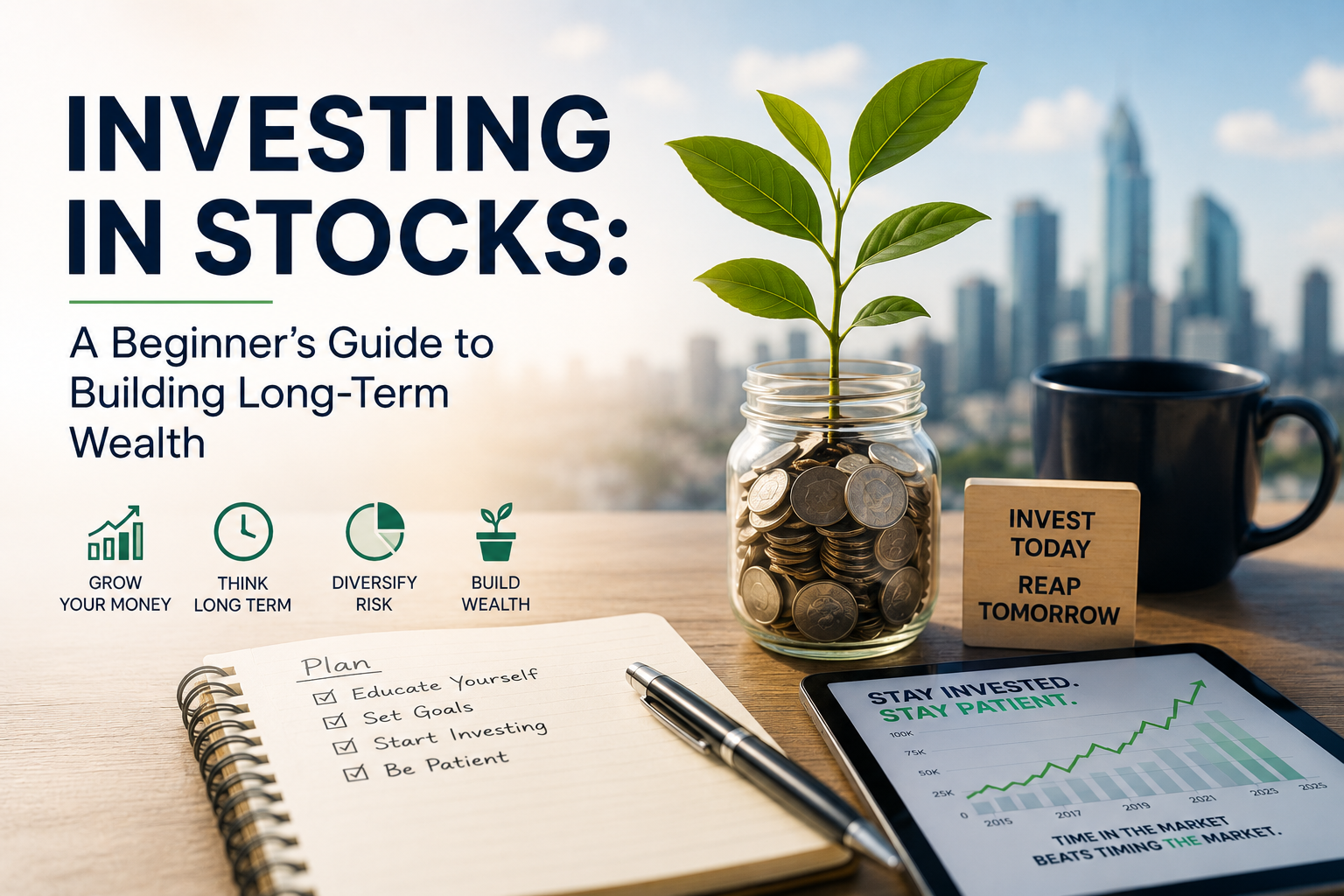
One of the biggest mistakes beginners make is waiting for the “perfect” time to invest. Even experienced investors cannot consistently predict short-term market movements. Rather than trying to buy at the absolute bottom, many successful investors focus on investing regularly and staying invested over the long term.
Final, Investing Is a Marathon, not a Sprint – Successful investing isn’t about predicting tomorrow’s market movement. It’s about understanding the fundamentals, diversifying your investments, staying patient, and remaining disciplined through market ups and downs. Nobody can predict the future moves in the market, history has shown that disciplined, long-term investing has rewarded patient investors over decades.
Capital Lenses Take
Investing isn’t about finding the next stock that doubles overnight. It’s about building knowledge, developing discipline, and giving your money time to grow. The earlier you begin, the more time you give compound growth to work in your favor.
Frequently Asked Questions
How much money do I need to start investing?
Many brokerage platforms now allow you to start with relatively small amounts. The most important step is building the habit of investing consistently rather than waiting until you have a large sum.
Should I invest every month?
Regular investing, often called dollar-cost averaging, helps reduce the impact of short-term market fluctuations and builds discipline over time.

About the Author
Tabasum Imtiaz is a finance professional with over a decade of experience in financial planning, manufacturing finance, budgeting, operational finance & capital markets. Through Capital Lenses, he explains investing and financial markets in a clear, practical way to help readers make more informed financial decisions.